
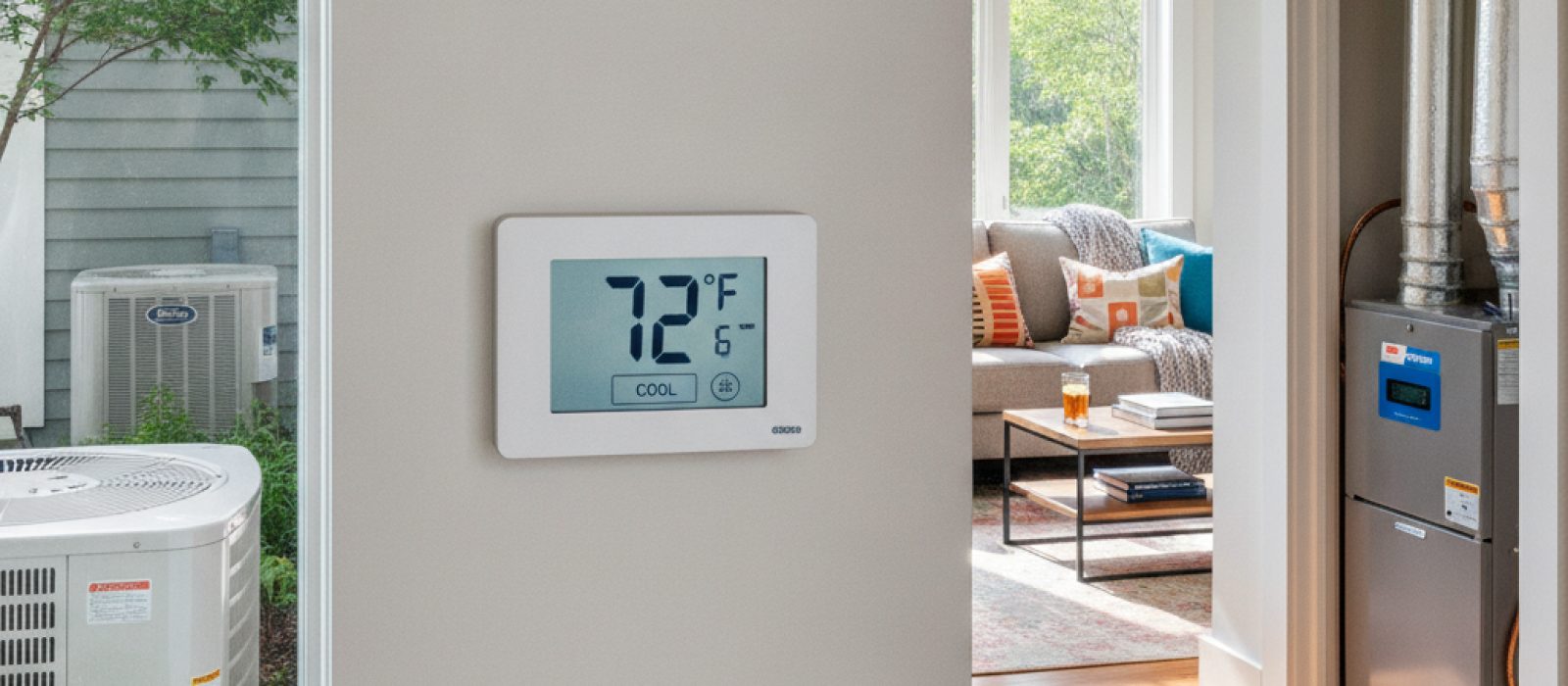
York, Ruud, Bryant and American Standard HVAC: Brand Overview
A guide to understanding the cooling technology and reliability of four major HVAC manufacturers for U.S. homeowners.
4 min read

Portable air conditioners operate by pulling warm air from a room, cooling it through a refrigeration cycle, and exhausting the heat outdoors through a flexible hose. This hose must be vented through a window or a sliding door, which is a fundamental requirement for the unit to function effectively. Unlike central systems that circulate air through a home's ductwork, these units are designed to provide spot cooling for specific areas.
Because the entire refrigeration system, including the compressor, is housed inside the portable unit, these devices generate noise during operation. Homeowners should anticipate a consistent hum while the unit is cooling, which may be a factor in bedrooms or quiet home offices. Efficiency is also a critical consideration, as portable units often handle heat exchange less effectively than window-mounted or permanent systems.
Portable units excel in scenarios where permanent installations are not feasible or permitted. They are often the primary solution for renters or those living in older homes where the architectural design precludes the installation of modern central cooling. Since they move on casters, they can be relocated from a living room during the day to a bedroom at night, offering versatile cooling where it is needed most.
The most common drawback is the inefficiency caused by the exhaust hose. This hose radiates heat back into the room while it is venting, which can counteract some of the cooling effort. Furthermore, these units occupy valuable floor space and require a dedicated electrical circuit to prevent overloading, which is a common issue in older homes requiring Electrical Services.
Condensate management is another factor to monitor. As the unit removes humidity from the air, water collects in an internal tank. While many modern units are self-evaporating, in high-humidity climates, the tank may fill up and trigger an automatic shut-off. Regular Maintenance & Tune-up of the drainage system is necessary to prevent leaks and ensure the unit continues to operate throughout the season.
The design of the venting system significantly impacts performance. Single-hose units draw air from inside the room to cool the condenser, then vent it outside, creating a negative pressure zone that pulls warm, unconditioned air from other parts of the house through gaps in doors or windows. This forces the unit to work harder to maintain the set temperature.
Dual-hose models are generally more efficient. One hose draws outside air to cool the condenser, while the other vents the hot exhaust. By keeping the air exchange separate from the room's internal air, these units achieve cooling more reliably. While they are often more expensive and slightly bulkier, the performance gains are typically worth the investment for long-term use.
Proper installation is paramount for both performance and safety. The exhaust hose must be as straight as possible to allow for efficient airflow. Kinks or excessive bends in the hose can cause heat to build up inside the unit, leading to premature failure or reduced cooling capacity. Always ensure the window kit is sealed properly with provided weatherstripping to prevent hot outside air from leaking back into the conditioned space.
From a safety standpoint, never use an extension cord with a portable AC unit. These devices draw a significant amount of current, and standard household extension cords are rarely rated for this load, creating a fire hazard. If the unit does not reach a wall outlet, it is safer to consult with a professional regarding the installation of a new outlet rather than bypassing electrical safety protocols.
Before purchasing a portable unit, evaluate your home's total cooling load. If you find yourself needing supplemental cooling in multiple rooms, a portable unit may not be the most cost-effective or energy-efficient strategy. It may be time to consider a more permanent solution, such as a high-efficiency heat pump or an upgrade to your existing central air system. Seeking an assessment from a professional can help you determine if your current infrastructure supports high-efficiency upgrades or if you need Energy Efficient Solutions to manage your utility costs effectively. While portable units serve a specific purpose, they are rarely a substitute for a properly sized and maintained HVAC system.
A guide to understanding the cooling technology and reliability of four major HVAC manufacturers for U.S. homeowners.
A comprehensive look at Mitsubishi mini-split technology and Hyper-Heat performance for year-round climate control in U.S. homes.
A comprehensive guide to understanding Daikin HVAC systems, including model tiers, standard maintenance requirements, and factory warranty coverage.
A comprehensive guide to understanding Carrier air conditioning systems, efficiency ratings, installation factors, and maintenance requirements.
An objective look at Goodman HVAC systems, covering performance, longevity, and what homeowners should know before choosing a budget-friendly cooling solution.
A guide to understanding Trane residential cooling systems, including component integration and maintenance requirements for homeowners.
Be the first to comment.