
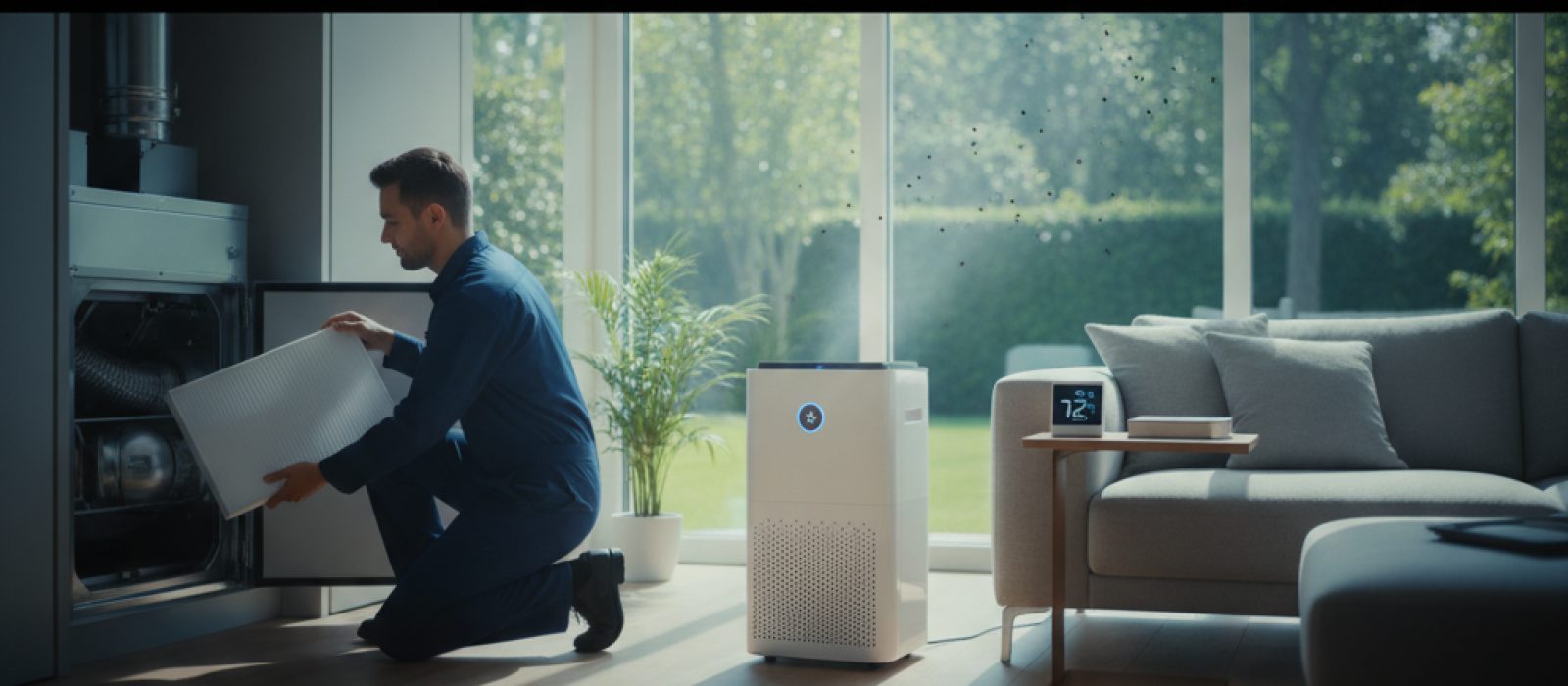
HEPA Air Cleaners for Allergies: What Actually Works
Learn how HEPA air cleaners function, their limitations in home environments, and how to effectively manage indoor air quality for allergy relief.
4 min read

Secondhand smoke is a complex mixture of gases and fine particulate matter that does not respect walls or closed doors. In multi-unit housing or shared ventilation environments, HVAC systems often act as a distribution network for these pollutants. When smoke enters the return air ducts, it is not merely pushed around; it is diluted and redistributed throughout the entire connected system, potentially affecting rooms far from the source of the smoke.
The primary mechanism for this migration is pressure differential. HVAC systems are designed to balance air intake and exhaust, but if a unit is under-pressurized compared to an adjacent space, air—and the contaminants within it—will naturally flow from high-pressure areas to lower-pressure areas. This movement occurs through common ductwork, gaps around plumbing penetrations, and shared wall voids that are not properly sealed.
Most residential HVAC systems utilize standard-rated air filters designed primarily to protect the equipment from large dust particles and debris. These filters are largely ineffective at capturing the fine particulate matter (PM2.5) and gaseous compounds found in tobacco smoke. The particles in smoke are microscopic, often passing straight through standard pleated filters without resistance.
Relying on a higher-rated filter in a standard residential blower unit can sometimes be counterproductive. If a filter is too dense, it creates static pressure that the blower motor may not be rated to overcome. This can lead to decreased airflow, reduced heating or cooling efficiency, and premature motor failure. If you are struggling with persistent odors or pollutants, professional Indoor Air Quality assessments can help determine if your specific system can support higher-rated filtration media without compromising performance.
Reducing the impact of secondhand smoke requires a multi-layered approach. The first step involves identifying and sealing air leaks. Smoke travels through the path of least resistance, which often includes gaps where electrical conduits, plumbing pipes, or ductwork pass through walls and floors. Using fire-rated caulk or expanding foam to seal these penetrations can significantly reduce the volume of air transferred between units.
Beyond sealing, consider the following mechanical adjustments:
When environmental pollutants become a recurring health concern, professional intervention is necessary. Technicians can perform a blower door test to identify the exact locations where air is leaking into your home. They can also evaluate your system’s capacity for advanced air purification technology, such as ultraviolet (UV) germicidal lights or electronic air cleaners, which are designed to neutralize or capture smaller contaminants that standard media filters miss.
It is important to understand the limits of these systems. While electronic air cleaners can be highly effective, they require strict adherence to Maintenance & Tune-up schedules to remain functional. If the collector plates or ionizing wires become coated in residue, their efficiency drops rapidly. Furthermore, any modifications to the electrical components of your HVAC system should be performed by a licensed professional to ensure safety and compliance with local building codes.
Adding filtration or purification devices increases the resistance the blower motor must work against. A professional can measure the external static pressure of your system to ensure that any upgrades do not exceed the manufacturer’s specifications. Overworking a motor can lead to overheating or frozen coils in the summer, which might trigger the need for Emergency HVAC services.
If you live in a building where HVAC systems are interconnected, the most effective long-term solution is often addressing the source or improving the building envelope. However, for immediate relief, focusing on localized purification and professional sealing of the living space provides the most reliable results. Prioritize keeping your system clean and well-maintained to ensure that it functions as efficiently as possible while you navigate air quality challenges.
Learn how HEPA air cleaners function, their limitations in home environments, and how to effectively manage indoor air quality for allergy relief.
Learn to identify common indoor pollutants and discover practical, effective strategies to improve the air quality within your home.
Learn the balance between natural ventilation and mechanical filtration to maintain optimal indoor air quality in your home.
Learn how common household features like aquariums and plants impact indoor air quality and how to manage the resulting humidity levels effectively.
Discover how holiday traditions impact your home's indoor air quality and learn practical steps to maintain a healthy breathing environment this winter.
Improve productivity and health by optimizing the indoor air quality of your home office through ventilation, filtration, and humidity control.
Be the first to comment.