
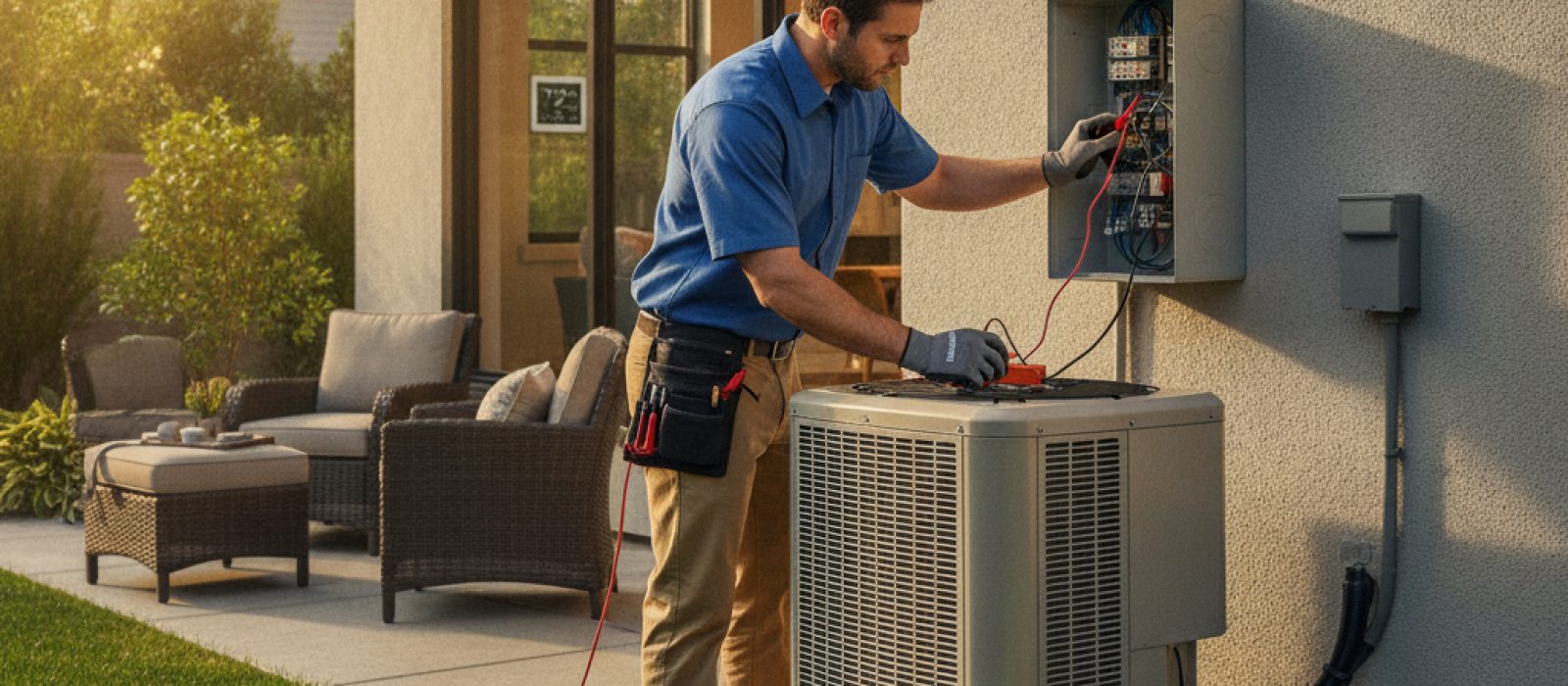
HVAC Disconnect Box: What It Is and Why It Matters
Learn the function of the HVAC disconnect box, why it is vital for safety, and how to identify when this critical component requires professional attention.
4 min read

The refrigerant lines are the copper pipes that connect your outdoor condenser unit to the indoor evaporator coil. These lines serve as the circulatory system for your cooling equipment, transporting refrigerant in a continuous cycle to absorb heat from inside the home and release it outside. The larger of these two pipes, known as the suction line, carries cool, low-pressure refrigerant gas back to the compressor.
Because this line is significantly colder than the surrounding ambient air, it is prone to condensation and heat gain. When the insulation on this line degrades or is missing, the refrigerant absorbs heat from the attic, crawlspace, or outdoor environment before it reaches the compressor. This forces the system to work harder to achieve the desired temperature, ultimately reducing the overall efficiency of your cooling process.
Over time, the foam rubber insulation typically used on these lines breaks down due to prolonged exposure to ultraviolet radiation, temperature fluctuations, and moisture. As the material becomes brittle, cracks, or peels away, it loses its thermal resistance. This exposes the cold pipe to the warmer air surrounding it, leading to several operational issues.
One primary consequence is the loss of cooling capacity. If the refrigerant warms significantly during its return trip to the compressor, the system must run longer cycles to compensate for the heat gain. This increased runtime contributes to higher utility costs and places additional strain on mechanical components. Furthermore, unprotected cold pipes often sweat in humid environments, which can lead to dripping water that may damage surrounding structures or create localized mold growth.
Homeowners should perform a visual inspection of the accessible refrigerant lines at least once per season. If the black foam insulation is missing in large sections, crumbling to the touch, or flattened, it is time to replace it. A healthy insulation sleeve should be intact, flexible, and fully cover the copper pipe from the point where it exits the house to the connection at the condenser unit.
If you notice excessive water pooling around your outdoor unit or signs of moisture on the pipes inside your attic, the insulation has likely failed. While periodic Maintenance & Tune-up visits by a professional will include checking these lines, a quick visual check during the shoulder seasons can help you identify damage before it impacts your comfort.
The most common material for insulating refrigerant lines is closed-cell elastomeric foam. This material is specifically designed for HVAC applications because it is resistant to moisture absorption and can withstand the temperature ranges associated with residential cooling systems. When selecting insulation, you must match the inner diameter of the foam tubing to the outer diameter of your copper suction line.
Standard sizes are usually available at supply houses or hardware retailers. Using a diameter that is too large will leave gaps that allow air to circulate between the pipe and the insulation, negating the benefits of the installation. Ensure the material is rated for outdoor use, as some basic foam types degrade rapidly under direct sunlight without a protective coating or UV-resistant wrap.
For most homeowners, replacing visible sections of insulation is a manageable task. If the lines run through complex wall cavities or are inaccessible, contact a technician for professional assistance. Before beginning, ensure the system is turned off at the thermostat to prevent any accidental engagement during your work.
If you discover that the insulation is soaked or the underlying copper shows signs of corrosion, do not attempt to repair it yourself. These issues may indicate a refrigerant leak, which requires specialized tools and certification to handle. In such cases, professional AC Services are necessary to ensure the system is pressurized correctly and to prevent environmental contamination.
While fixing insulation is a low-cost maintenance task, it is most effective when viewed as part of a larger strategy for Energy Efficient Solutions. A system that is properly insulated will perform more consistently, but it cannot overcome significant issues like clogged air filters or blocked airflow. Keeping the lines insulated is a foundational step that supports the longevity of your mechanical equipment.
If you find that your home remains uncomfortable despite well-maintained refrigerant lines, consider whether other factors, such as poor insulation in your attic or leaky ductwork, are contributing to the problem. In these instances, professional Ductwork Services can identify where your cooling energy is being lost before it ever reaches your living space. Comprehensive care ensures that every component of your HVAC system operates in harmony.
Learn the function of the HVAC disconnect box, why it is vital for safety, and how to identify when this critical component requires professional attention.

Ensure long-term comfort and efficiency by asking the right questions about your home's ductwork design during the new construction process.
Discover the signs of rodent infestation in your HVAC system and learn how to identify, address, and prevent pest issues in your ductwork.

Learn why maintaining a detailed history of your HVAC service records protects your warranty, boosts resale value, and ensures system longevity.
Learn how to identify and resolve common crawl space ductwork problems, including moisture buildup, pest intrusion, and damaged insulation.

Learn how upgrading or maintaining your HVAC registers and grilles can optimize home comfort, improve efficiency, and protect your indoor air quality.
Be the first to comment.